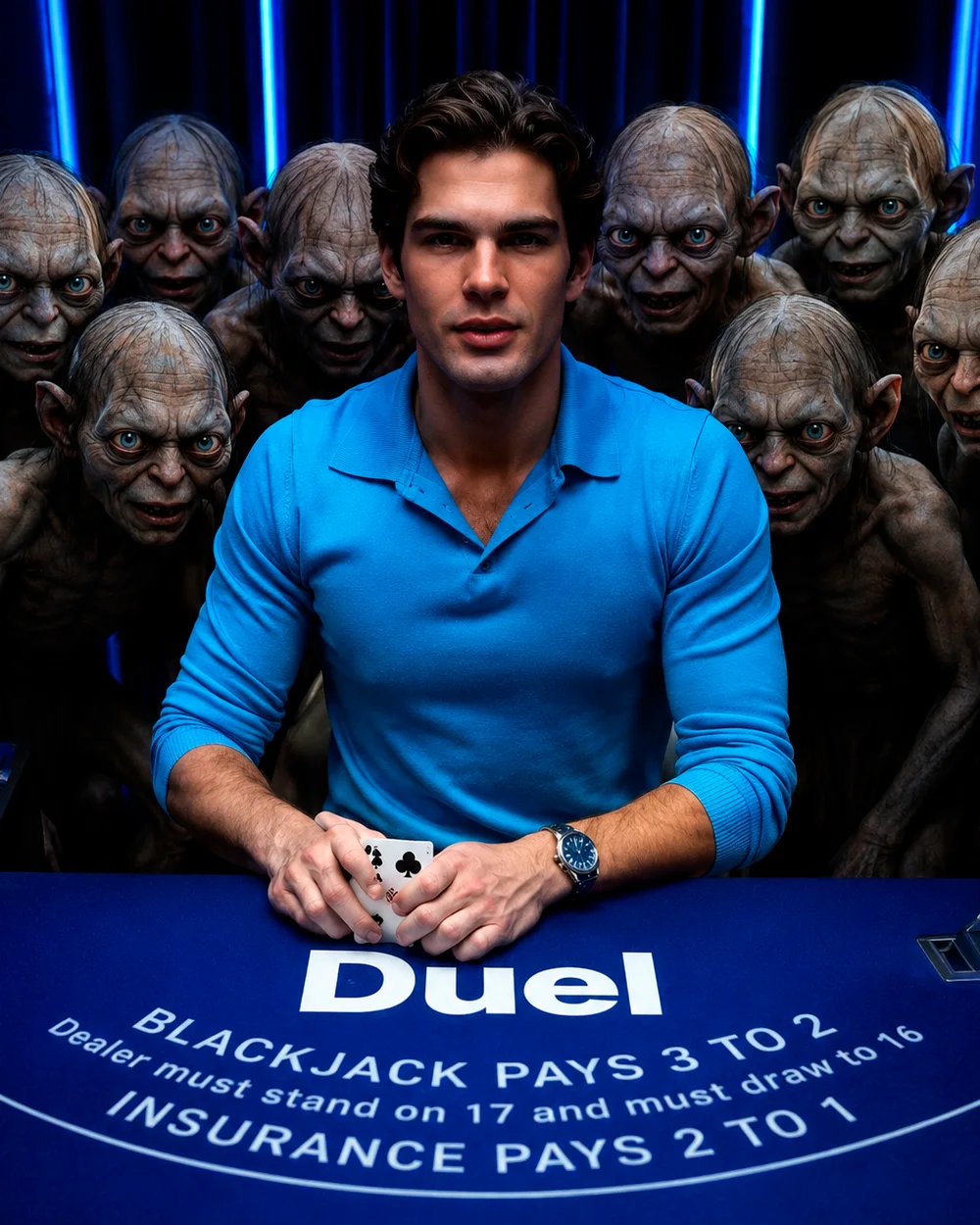
Sneako Threatens Lawsuit Over AI Clip Featuring Duel Casino
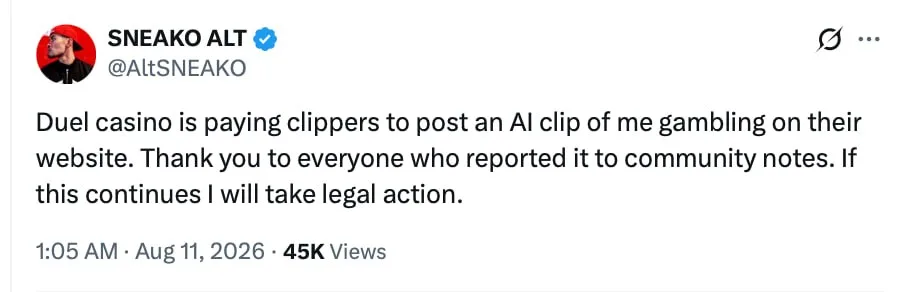
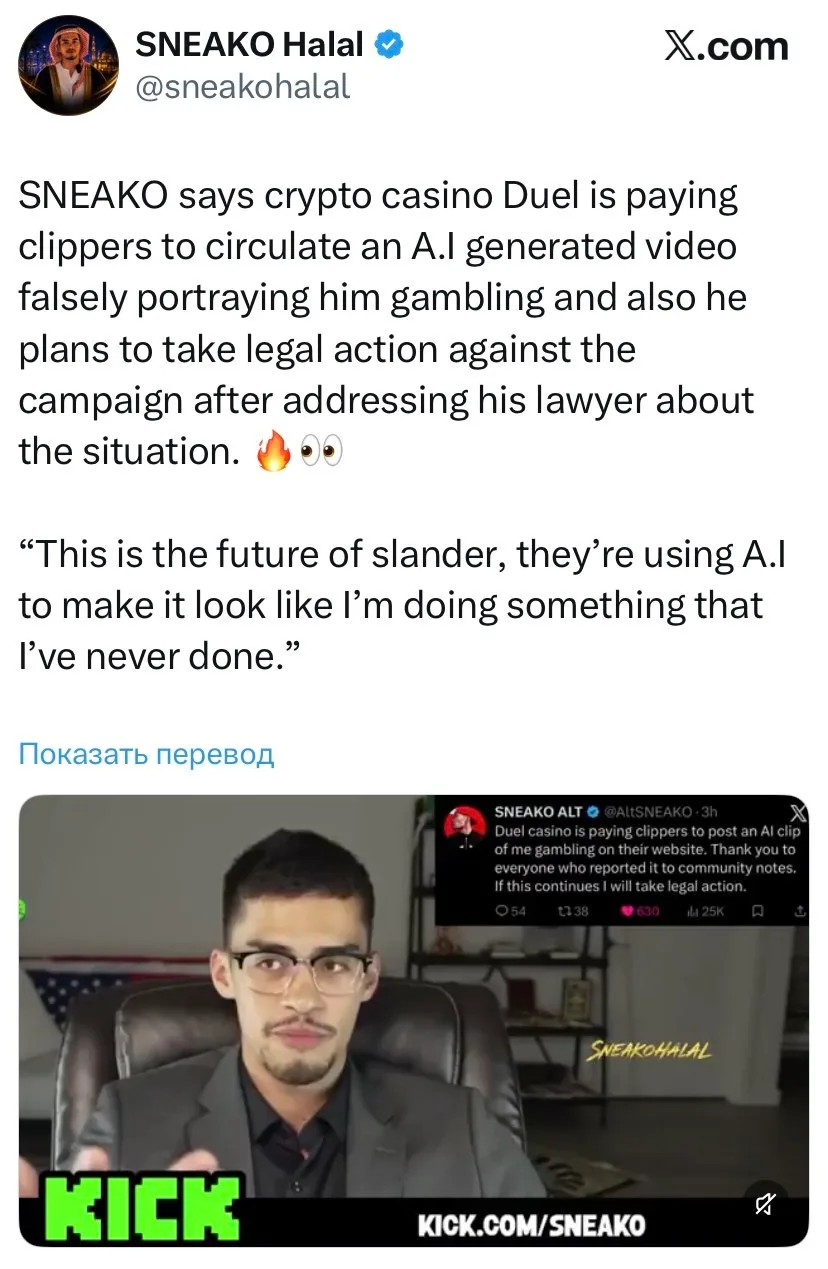
A scandal is gaining momentum in the streaming community, encompassing everything that defines the internet in 2026: AI-generated video, crypto casinos, and a war of compromising materials. Streamer Sneako claims that a viral video, in which he allegedly plays slots on the Duel platform, is a deepfake created by a neural network. His lawyer has sent out demands to remove publications and warned that a defamation lawsuit would be the next step.
How it all started
The trigger was a short video that spread across clip platforms — TikTok, Shorts, Reels. In the recording, a person indistinguishable from Sneako plays gambling games on Duel. The context accompanying the video by its distributors added a piquant touch: according to them, the streamer had previously refused to advertise this very platform, citing his faith — and now he was supposedly "caught" gambling.
The calculation is clear. Sneako, whose real name is Nico Kenn De Balinthazy, publicly broke with gambling after converting to Islam: back in spring 2024, he said he rejected a sponsorship deal worth approximately $20 million because he didn't want to sell casinos to his audience. Against this backdrop, footage of him playing slots would look like an exposé of a hypocrite — if it were real.
Streamer's response
Sneako reacted harshly: the person in the video is not him, and the video itself was made using AI. But he didn't stop there. According to the streamer, the video's spread was not spontaneous: an paid campaign was behind the wave of publications, and he believes Duel itself paid for it — through a network of accounts churning out short viral videos. There is no confirmation of this version yet, and the platform has not publicly commented on it. At the same time, a third name surfaced on social media. Some commentators saw the hand of Rollbit — a competing crypto casino, long and openly hostile to Duel — in the story. They suggested that the campaign could have been coordinated by a person known as the real owner of Rollbit, a certain Daniel Dixon. A caveat is needed here, and not just one.
Officially, Rollbit's founders hide behind the pseudonyms Razer and Lucky; the company has not disclosed their identities. The assertion that Dixon is behind the nickname Lucky has circulated for years on X — primarily in accounts close to the Duel audience, meaning that in the midst of a war between two casinos, the source can hardly be called unbiased. There is currently no official data confirming either the owner's identity or his involvement in the campaign.
Lawyer's letter
Sneako's lawyer, meanwhile, moved the conflict into the legal sphere. The official demand sent to the authors of the publications states: the video does not depict his client, and the assertion that the blogger advertised gambling is untrue. The lawyer insists on the removal of the original post and all materials with similar claims, as well as a public retraction. If the demands are ignored, the streamer's side is prepared to go to court with a lawsuit for defamation.
Familiar scenario
The story of the fake Sneako is not the first time the gambling business has been at the center of a deepfake scandal. In March 2025, Hong Kong actor Louis Koo, through his management, refuted AI-generated advertisements for the Malaysian platform RWS77 — fraudsters compiled the video from fragments of his films. Group-IB then counted more than 1300 fraudulent gambling sites using similar celebrity face-swapping techniques. So the technology is well-established, and streamers are the obvious next target: they spend hours on camera, meaning there's plenty of training material for neural networks. Duel itself is no stranger to headlines: the platform, launched in 2025 by Finnish Ossi Ketola — the creator of the CSGOEmpire skin casino — has already had a series of scandals surrounding outrageous streams. And the spat between the Duel and Rollbit communities has turned into a protracted public war by this summer, with mutual accusations of scams.
What's next
For now, the story looks like a case of "he said, she said." The lawsuit, apparently, has not yet been filed — only a pre-trial demand. Duel has not admitted to paying for the campaign, Rollbit has not commented on its management's involvement, and there is no publicly available expert analysis that would independently confirm the AI origin of the video. The only thing all parties agree on is that the video itself exists and has spread widely. Whatever the outcome, the precedent is telling. If compromising material on a public figure once had to be obtained, now it can be generated in an evening — and courts around the world are only just beginning to figure out how to deal with it. For streamers with millions of followers, the issue is no longer theoretical: the next "leak" with their face could garner millions of views faster than lawyers can type the first letter.
Sources: https://x.com/Dexerto/status/1768041866568532463 https://en.wikipedia.org/wiki/Duel.com https://iq.wiki/wiki/lucky-rollbit https://www.gamblingnews.com/news/gambling-platform-uses-ai-deepfake-for-fraudulent-marketing/