Duel Brings Back Blackjack Streams: Season Two, Clavicular and Gollum at the Table
On August 10, the crypto casino Duel held the first guest broadcast of the second season of its live streams at the blackjack table. The break lasted just over a week: the first season closed at the end of July, and it didn't close quietly — the platform's founder Ossi Ketola recorded an address directly from the gaming table and promised that the style would remain, but the content would acquire internal rules. The very first broadcast of the new season showed what these rules look like in practice.
What happened on air
The main guest was Clavicular — an American streamer known for looksmaxing content. According to broadcast footage and clips circulating online, he stated that players with bets below $25 should vacate their seats at the table so that other participants could sit there.
Then the broadcast followed the platform's signature script. Andrew Tate look-alikes, Clavicular himself, and Duel founder Ossi Ketola appeared on screen. A short Kanye West look-alike performed "Can't Tell Me Nothing" separately. The most discussed moment was a person dressed as Gollum from "The Lord of the Rings." He approached Clavicular, uttered "my precious," and climbed onto the gaming table, stopping the game for a while.
Fragments of the broadcast spread across X, with individual videos gaining over 100,000 views.
Who is Clavicular
Brayden Eric Peters was born on December 17, 2005, an American. He gained fame on the wave of looksmaxing — a movement around "maximizing appearance," where methods go as far as bonesmashing, i.e., hitting one's own face with a hammer. He has 1.1 million followers on TikTok and about 417,000 on Kick as of August 5, 2026.
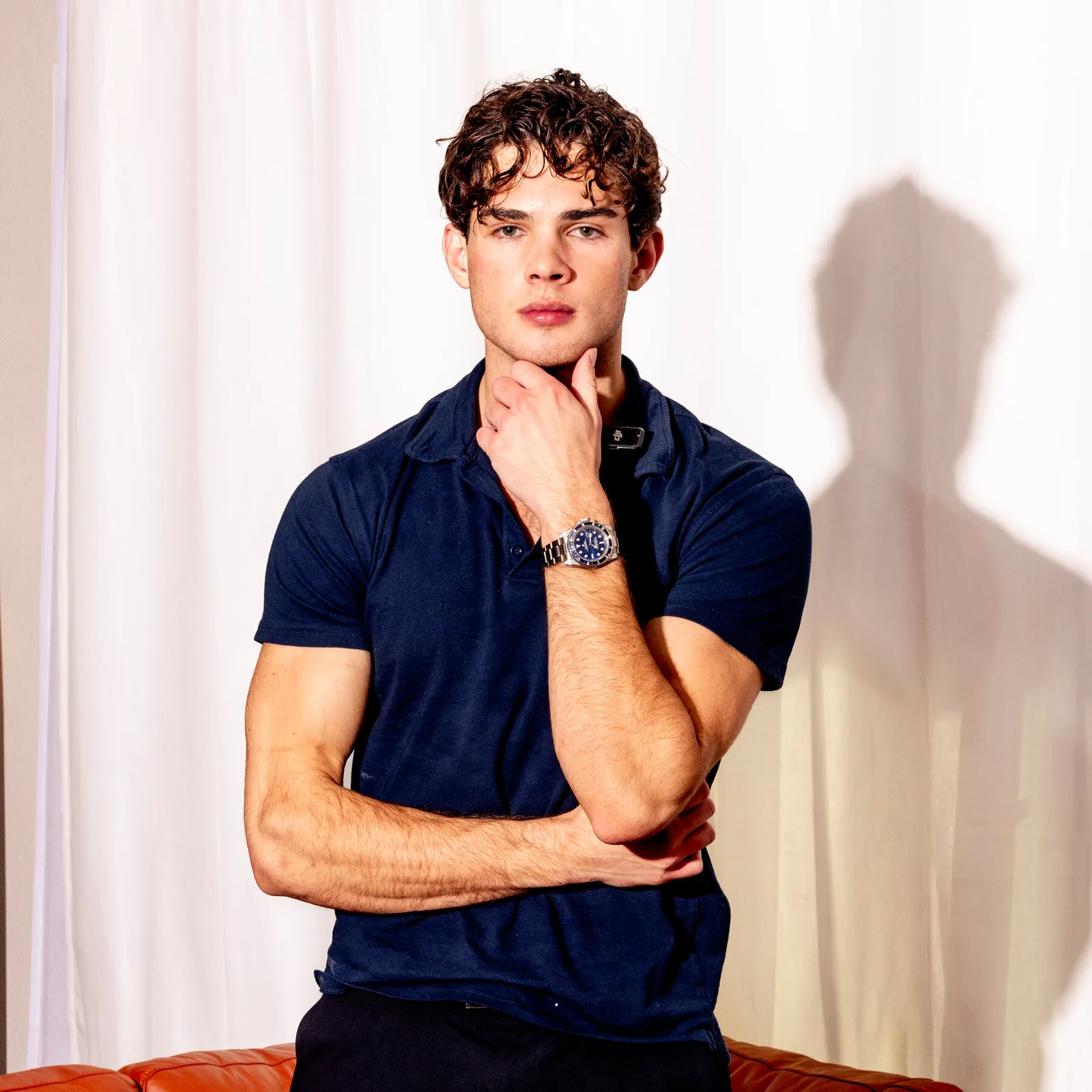 For Duel, this is exactly the guest profile the platform was looking for all season one: there's an audience, the reputation is controversial, and any of his appearances on air inevitably generate clips.
Why $25 is not a random number
The remark about bets below $25 looks like rudeness on live air. But $25 is not a figure of speech or an "eyeball" estimate. Duel operates two tables: with limits from $10 to $15,000 and from $25 to $100,000. That is, $25 is the lower entry threshold for the second, large table. The phrase "if you're betting less than $25, make way" actually means "this table is not for small bets." This creates an interesting construct: what is presented to the viewer as a guest's antics simultaneously serves as an advertisement for a more expensive table. Whether Clavicular understood this is an open question. But the result for the platform is the same: the clip went viral, and with it, information about the existence of a table with a hundred-thousand ceiling spread.
Second season: what was promised and what happened
On July 28, Ketola briefly formulated the platform's new policy: "slop" leaves, "danger" remains. This formulation was backed by internal moderation standards and editorial control over what is released under the brand. On July 30, the closure of the first season was announced.
To understand what exactly changed, it's worth recalling what the first season was like. The archive of broadcasts covers the period from May 9 to June 14, 2026. During this time, the following appeared on air: Ketola himself as a dealer (May 5), a dealer without hands (May 28), a person in a SpongeBob costume who climbed onto the table and simulated sexual intercourse with a female dealer (June 3), a guest announced as Mike Tyson at a high-stakes table (June 14). A separate storyline was an Andrew Tate look-alike who sang, twerked, and did splits right on the gaming table. All of this happened against a backdrop of accusations of racism and Nazi symbolism on air — it was these that forced the platform to stop.
Now compare that to August 10. Gollum on the table is also a violation of all format decencies, but it's absurdist clowning, not simulated sex or a Nazi gesture. The look-alikes, Kanye's song, the remark about bets — the material is provocative, but of a fundamentally different kind.
It seems the promise has been fulfilled literally: the line has shifted not towards decency, but towards a different type of scandal. "Danger" remains — it's just about awkwardness now, not insults.
How it was viewed from the outside
The first season didn't end on its own. By July, Duel's broadcasts were being written about not as memes, but as a case study: industry publications analyzed the streams in articles with phrases like "crossed all red lines," specifically highlighting episodes with Nazi gestures and racist antics. There were also analyses describing the platform as an example of what happens when a stream has no editor at all.
For a casino without a major jurisdiction license, such press is not just an image problem. It affects who will agree to be a partner, which payment channels will remain open, and how search engines and aggregator platforms will mention the platform. The pause at the end of July and talks about "internal standards" appear to be a direct response to this pressure, rather than a sudden attack of conscience.
What's important: the broadcasts themselves were not stopped. Only one type of them was stopped.
Why does the casino do this at all
It's important to understand the platform's economics here. Duel operates with zero house edge on its own games — we've covered how this works separately. The casino earns nothing from blackjack itself: the table's payout leaves no margin for the platform.
more
This means the broadcast is not entertainment around the main business. The broadcast is the marketing budget. Every clip that goes beyond the stream and gets a hundred thousand views on X costs less than any advertising purchase — and works for an audience that regular casino advertising simply doesn't reach. Hence the logic of guest selection. You don't need someone who plays well, but someone who will leave clips behind.
What's in it for the player
Separate two things that the broadcast carefully mixes. The table. Zero house edge doesn't disappear because of who's standing on it in a costume. The game conditions don't get better or worse because of the guest — and, by the way, they don't get better because the guest won on camera. Everything else. Payout speed, verification requirements, support behavior, what happens when withdrawing a large sum — the broadcast says nothing about this. Not a single broadcast in two seasons showed a guest withdrawing winnings and when the money arrived. This is the main disconnect: they show the most honest part of the platform, but questions arise about the part that isn't shown on camera. Clavicular's phrase about $25 is, in this sense, more honest than the rest of the broadcast. It directly states who is expected here — and it's not someone who came to see Gollum.
What to read next:
- Live Blackjack Duel: Tyson and everything else — format analysis and full chronicle of the first season
- Withdrawing money from Duel — terms, verification, and what happens with large sums
- Who created Duel — about Ossi Ketola and the second founder
- Duel vs. Stake — two platforms, two approaches to marketing