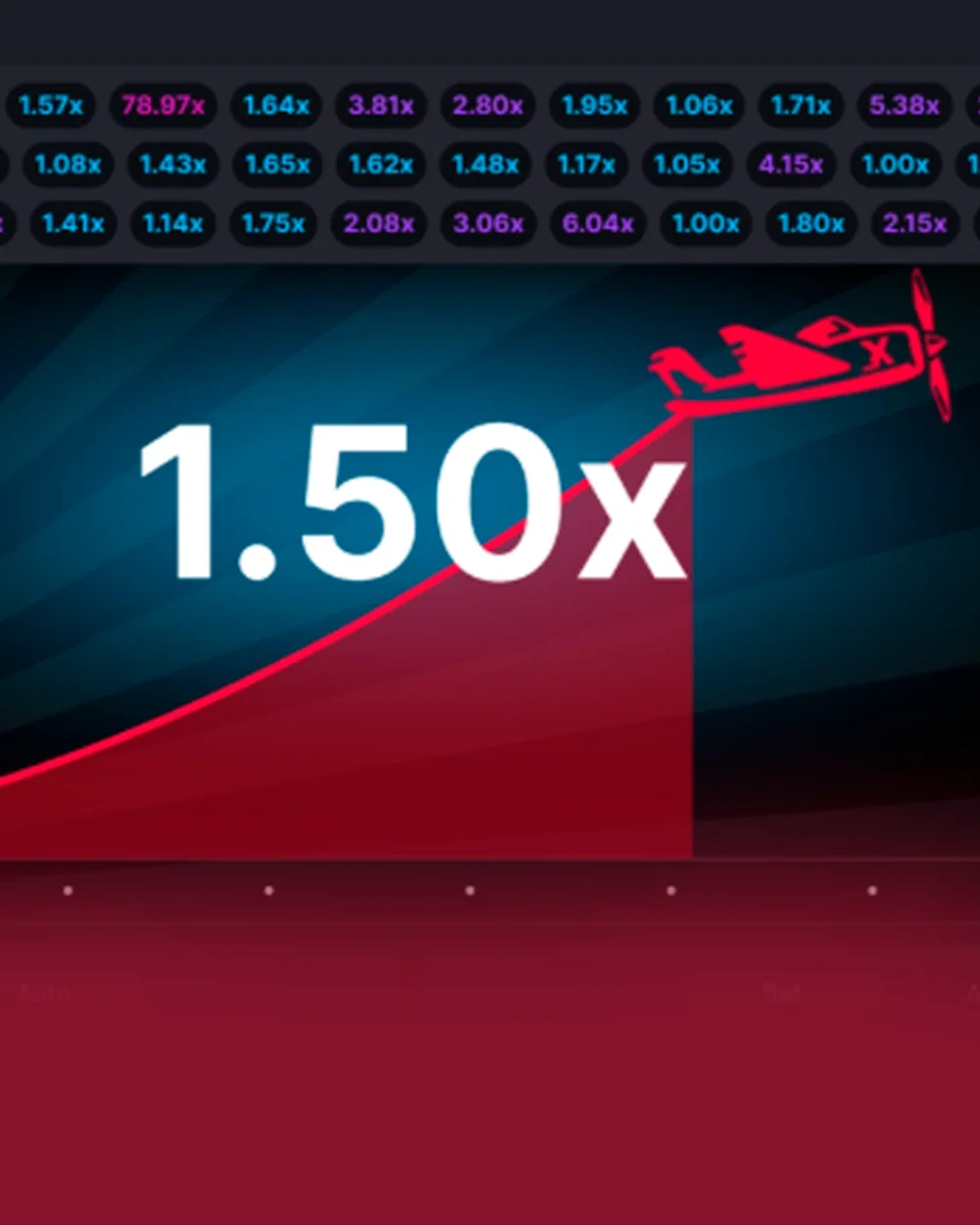
How Duel Operates Without a House Edge
Casinos profit from their margin. A slot machine returns 96% and keeps four, roulette takes 2.7%, and blackjack takes half a percent with perfect play. This isn't greed, but the very definition of business: the difference between what was wagered and what was paid out.
Duel has eliminated this difference in eleven of its games. The only correct question that follows is: how does the platform then survive?

Three Sources of Income
Third-party studio slots. There are thousands of them on the platform, and all come with the usual commission — three to four percent, sometimes more. Duel returns half, keeping the other half for itself. That means on a slot with a four percent edge, the platform takes two percent. This is less than competitors, but it's not zero, and the turnover there is incomparably larger than in Originals.
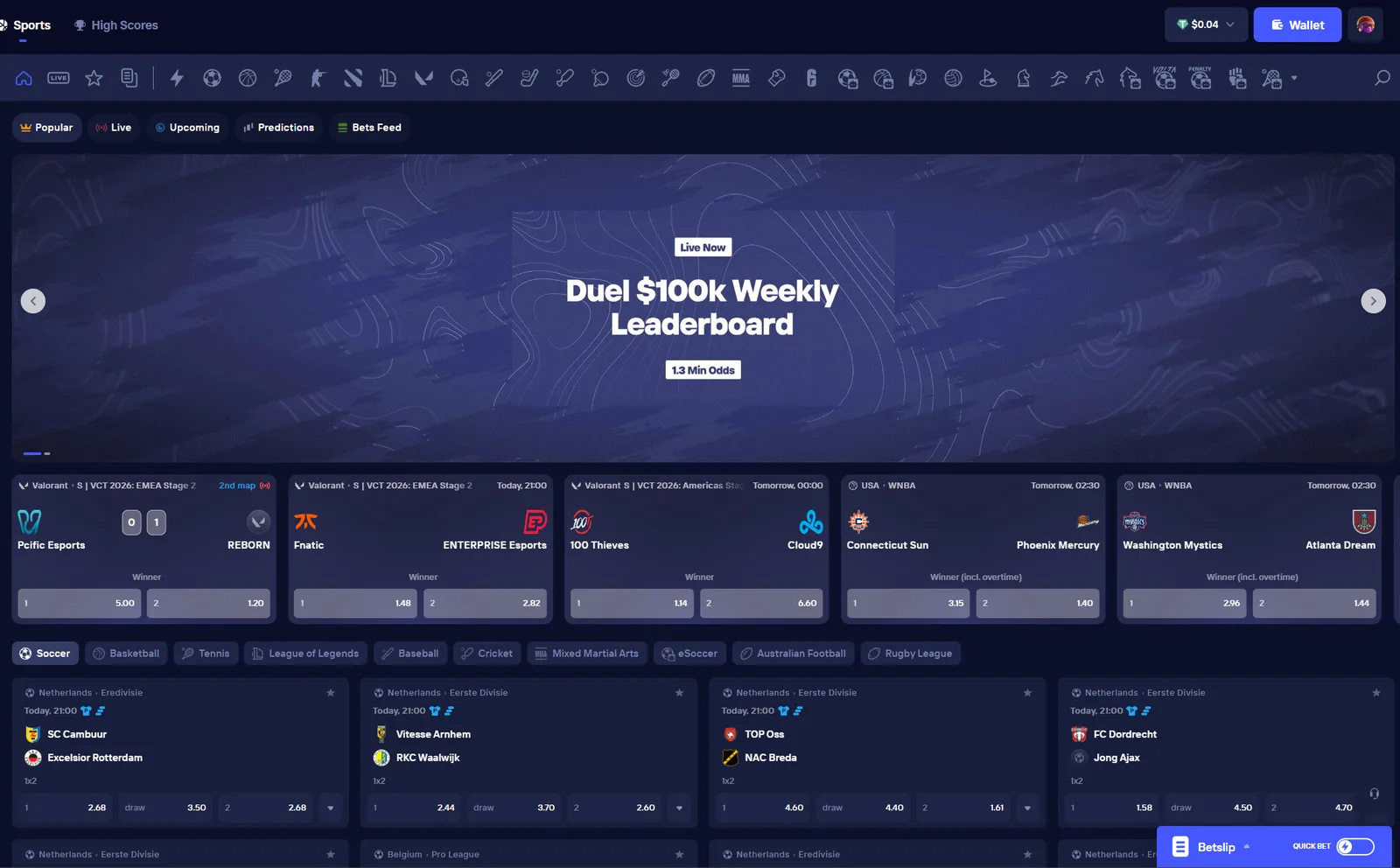
Sports betting. The bookmaker's margin is embedded in the odds and is not nullified by rakeback. Duel's sports section is well-developed, with a weekly leaderboard for one hundred thousand dollars and a separate monthly grid for two million.
Affiliate program. A classic industry scheme: affiliates are paid a share of their referred players' losses. Other platforms pay affiliates, and affiliates bring players here.
Why then free games?
The logic is exactly the same as why a supermarket sells milk below cost. Everyone needs milk, they come for it, and then fill their cart with other items.
Originals are a lure. They are free in terms of mathematical expectation, people write about them, search for them, and register for them. Then the person ends up on a platform with slots that have a regular margin, sports with regular odds, and leaderboards that require turnover. Some traffic will stay in the free games and bring nothing. The rest will pay for themselves and them.
The model is honest in the sense that it doesn't deceive anywhere. But it's worth understanding: a zero edge is a marketing tool, not charity.
What "one hundred percent" means and what it doesn't mean
It's important to be extremely precise here, because confusion around this number is widespread.
It means: the mathematical expectation of a round is zero. Over an infinite distance, the sum of your bets equals the sum of payouts.
It doesn't mean: you will be in profit. Zero is zero, not a positive number.
The difference is what happens over a finite distance, and that's where we live. With zero mathematical expectation, variance comes into play, and it can take your balance anywhere. A session of one hundred rounds in Plinko at high risk will equally likely end in a double or zero — even though "on average" you should have broken even.
Moreover: a player with a limited bankroll playing against a casino with an unlimited one, with zero mathematical expectation, will still eventually go broke if they play long enough. This is a classic result of probability theory, the gambler's ruin problem. A zero edge postpones this moment, but does not cancel it.
How much does it cost in money?
Let's calculate based on a turnover of one hundred thousand dollars.
| Where we play | House edge | Expected loss |
|---|---|---|
| Duel Originals | 0% | $0 |
| Duel Blackjack after rakeback | 0.1% | $100 |
| Duel Slots after rakeback | 2% | $2000 |
| Stake Originals | 1% | $1000 |
| Stake Slots after rakeback | 3.86% | $3860 |
| Average slot without rakeback | 4% | $4000 |
| European Roulette | 2.7% | $2700 |
| American Roulette | 5.26% | $5260 |
You can enter your own numbers into the rakeback calculator.
The spread between the top and bottom line is more than five thousand dollars on the same turnover. This is the price of choosing a platform and a game. Zero in the first line does not make the game profitable, but the difference between zero and five thousand is quite real.
We verified the claim
The "100% RTP" label is verifiable where the payout table is published. We took Plinko on sixteen rows with high risk and calculated the return as the sum of multipliers, weighted by the probability of hitting a cell.
It turned out to be 99.196%. Not one hundred.
Most likely, it's due to interface rounding: the extreme cell is labeled "1k", but for a clean hundred percent, it should pay around 1263×. A detailed analysis with a breakdown by positions is available on the Plinko page. The conclusion from it is not "they are cheating", but "check the exact value in the game itself".
In Mines, there are no discrepancies: the formula is clean, the multipliers are exactly one percent higher than on platforms with a one percent commission, and there is no rounding in the interface.
How sustainable is this
The main risk of the model is not mathematical, but business-related. The platform launched in July 2025, operates under an Anjouan license, and maintains conditions that are by definition unprofitable in one segment and pay off in another.
Such a structure lives exactly as long as the balance between bait and earnings converges. If the flow of players to paid sections drops, the first thing that will change will be the conditions for free ones. No one has given and cannot give any guarantees that the zero edge will remain in a year.
This is not a reason not to play. This is a reason not to build long-term plans around someone else's marketing campaign.
Frequently asked questions
How does the casino make money without commission in its games? On slots from third-party studios, on sports betting, and on the affiliate program.
Does zero edge mean you can win? No. The mathematical expectation becomes zero, not positive.
Why did the Plinko check yield 99.196%? Due to the rounding of the extreme cell in the interface. With an exact value of about 1263×, the sum converges to 100%.
Will the zero edge remain? The platform has made no commitments in this regard. Conditions may change.
Are there similar offers from others? The closest is Stake Originals with one percent. Zero is currently unique in the market.
All calculations were performed by us based on the published game tables. We do not place affiliate links and do not receive money for the material.