Mines on Duel: Multipliers and Odds
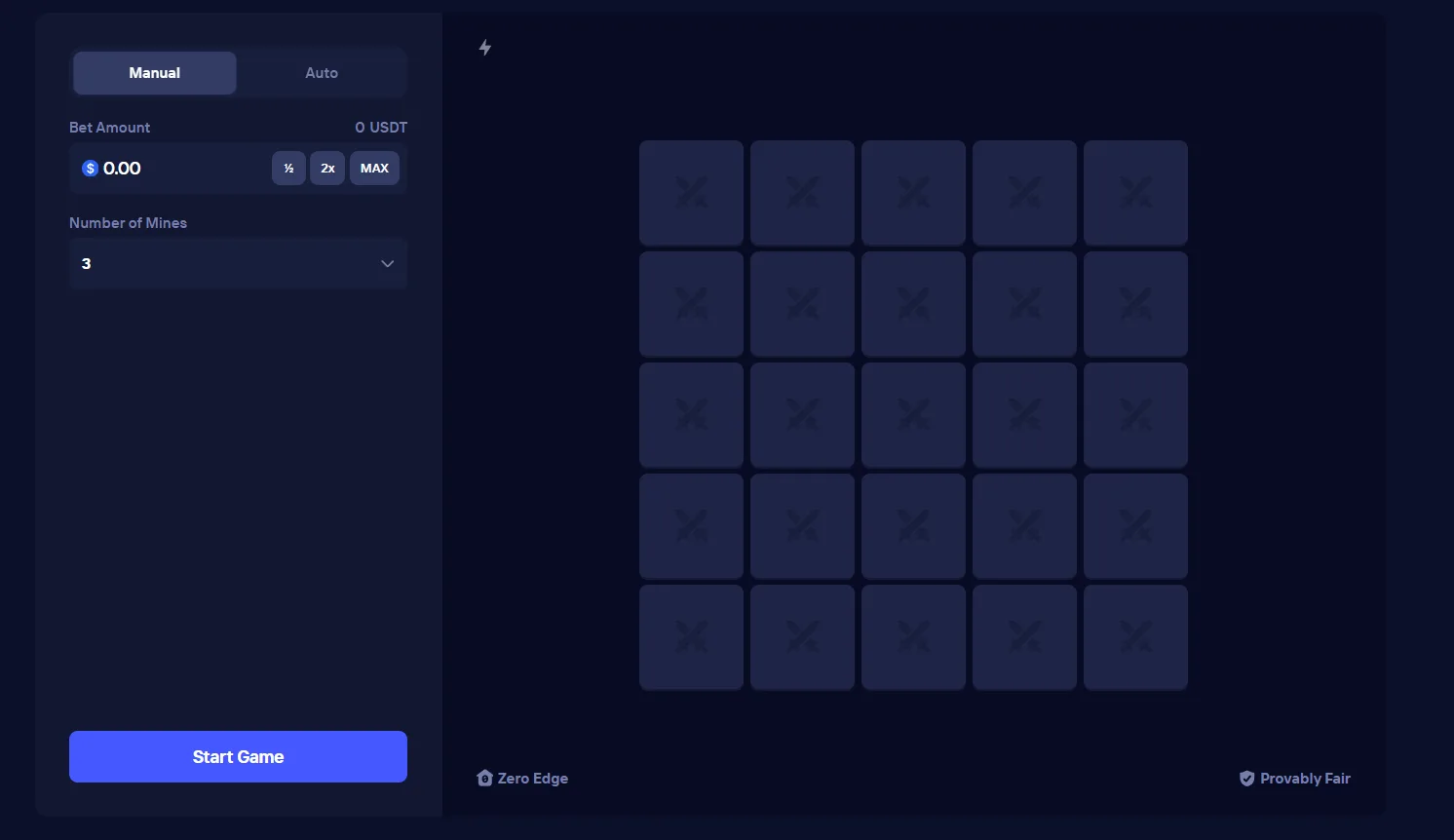
A five-by-five field, twenty-five tiles, with some of them hiding mines. You open tiles one by one: a diamond means the multiplier grows, a mine means your bet is lost. You can cash out after any click.
The mechanics are exactly the same as everyone else's. The difference is in one multiplier within the formula, and it accounts for exactly one percent on each cell of the table.
Formula
Multiplier after each opened tile:
C(25, d) / C(25 − m, d)
Here m is the number of mines, d is how many diamonds are opened, C(n, k) is the number of combinations.
The meaning of the parts is simple. C(25, d) — all possible sets of tiles you could have opened. C(25 − m, d) — only those where there are no mines. The ratio of the first to the second is the fair coefficient: this is how much you need to pay for the game to break even.
For platforms with a commission, the result is multiplied by the share they leave to the player: for Stake, it's 0.99. Duel does not have such a multiplier — hence the zero house edge.
Checking extreme cases. Three mines, one diamond: 25 ÷ 22 = 1.136 → 1.14×. Twenty-four mines, one safe tile: 25 ÷ 1 = 25.00× exactly.
Payout Table
Full matrix: horizontal is the number of mines, vertical is the number of opened diamonds.
The table is wider than the screen — scroll it sideways.
| GemsMines on the board | 1 | 2 | 3 | 4 | 5 | 6 | 7 | 8 | 9 | 10 | 11 | 12 | 13 | 14 | 15 | 16 | 17 | 18 | 19 | 20 | 21 | 22 | 23 | 24 |
|---|---|---|---|---|---|---|---|---|---|---|---|---|---|---|---|---|---|---|---|---|---|---|---|---|
| 1 | 1.04 | 1.09 | 1.14 | 1.19 | 1.25 | 1.32 | 1.39 | 1.47 | 1.56 | 1.67 | 1.79 | 1.92 | 2.08 | 2.27 | 2.50 | 2.78 | 3.13 | 3.57 | 4.17 | 5.00 | 6.25 | 8.33 | 12.50 | 25.00 |
| 2 | 1.09 | 1.19 | 1.30 | 1.43 | 1.58 | 1.75 | 1.96 | 2.21 | 2.50 | 2.86 | 3.30 | 3.85 | 4.55 | 5.45 | 6.67 | 8.33 | 10.71 | 14.29 | 20.00 | 30.00 | 50.00 | 100.00 | 300.00 | |
| 3 | 1.14 | 1.30 | 1.49 | 1.73 | 2.02 | 2.37 | 2.82 | 3.38 | 4.11 | 5.05 | 6.32 | 8.04 | 10.45 | 13.94 | 19.17 | 27.38 | 41.07 | 65.71 | 115.00 | 230.00 | 575.00 | 2,300 | ||
| 4 | 1.19 | 1.43 | 1.73 | 2.11 | 2.61 | 3.26 | 4.13 | 5.32 | 6.95 | 9.27 | 12.64 | 17.69 | 25.56 | 38.33 | 60.24 | 100.40 | 180.71 | 361.43 | 843.33 | 2,530 | 12,650 | |||
| 5 | 1.25 | 1.58 | 2.02 | 2.61 | 3.43 | 4.57 | 6.20 | 8.59 | 12.16 | 17.69 | 26.54 | 41.28 | 67.08 | 115.00 | 210.83 | 421.67 | 948.75 | 2,530 | 8,855 | 53,130 | ||||
| 6 | 1.32 | 1.75 | 2.37 | 3.26 | 4.57 | 6.53 | 9.54 | 14.31 | 22.12 | 35.38 | 58.97 | 103.21 | 191.67 | 383.33 | 843.33 | 2,108 | 6,325 | 25,300 | 177,100 | |||||
| 7 | 1.39 | 1.96 | 2.82 | 4.13 | 6.20 | 9.54 | 15.10 | 24.72 | 42.02 | 74.70 | 140.06 | 280.13 | 606.94 | 1,457 | 4,006 | 13,353 | 60,088 | 480,700 | ||||||
| 8 | 1.47 | 2.21 | 3.38 | 5.32 | 8.59 | 14.31 | 24.72 | 44.49 | 84.04 | 168.08 | 360.16 | 840.38 | 2,185 | 6,555 | 24,035 | 120,175 | 1,081,575 | |||||||
| 9 | 1.56 | 2.50 | 4.11 | 6.95 | 12.16 | 22.12 | 42.02 | 84.04 | 178.58 | 408.19 | 1,020 | 2,857 | 9,286 | 37,145 | 204,298 | 2,042,975 | ||||||||
| 10 | 1.67 | 2.86 | 5.05 | 9.27 | 17.69 | 35.38 | 74.70 | 168.08 | 408.19 | 1,088 | 3,265 | 11,429 | 49,527 | 297,160 | 3,268,760 | |||||||||
| 11 | 1.79 | 3.30 | 6.32 | 12.64 | 26.54 | 58.97 | 140.06 | 360.16 | 1,020 | 3,265 | 12,246 | 57,146 | 371,450 | 4,457,400 | ||||||||||
| 12 | 1.92 | 3.85 | 8.04 | 17.69 | 41.28 | 103.21 | 280.13 | 840.38 | 2,857 | 11,429 | 57,146 | 400,023 | 5,200,300 | |||||||||||
| 13 | 2.08 | 4.55 | 10.45 | 25.56 | 67.08 | 191.67 | 606.94 | 2,185 | 9,286 | 49,527 | 371,450 | 5,200,300 | ||||||||||||
| 14 | 2.27 | 5.45 | 13.94 | 38.33 | 115.00 | 383.33 | 1,457 | 6,555 | 37,145 | 297,160 | 4,457,400 | |||||||||||||
| 15 | 2.50 | 6.67 | 19.17 | 60.24 | 210.83 | 843.33 | 4,006 | 24,035 | 204,298 | 3,268,760 | ||||||||||||||
| 16 | 2.78 | 8.33 | 27.38 | 100.40 | 421.67 | 2,108 | 13,353 | 120,175 | 2,042,975 | |||||||||||||||
| 17 | 3.13 | 10.71 | 41.07 | 180.71 | 948.75 | 6,325 | 60,088 | 1,081,575 | ||||||||||||||||
| 18 | 3.57 | 14.29 | 65.71 | 361.43 | 2,530 | 25,300 | 480,700 | |||||||||||||||||
| 19 | 4.17 | 20.00 | 115.00 | 843.33 | 8,855 | 177,100 | ||||||||||||||||||
| 20 | 5.00 | 30.00 | 230.00 | 2,530 | 53,130 | |||||||||||||||||||
| 21 | 6.25 | 50.00 | 575.00 | 12,650 | ||||||||||||||||||||
| 22 | 8.33 | 100.00 | 2,300 | |||||||||||||||||||||
| 23 | 12.50 | 300.00 | ||||||||||||||||||||||
| 24 | 25.00 |
The matrix is symmetrical: the multiplier for five mines and three diamonds is the same as for three mines and five diamonds. This follows directly from the formula and serves as a quick check for any Mines table — if there is no symmetry, the table is calculated incorrectly.
The maximum is 5,200,300× with thirteen mines and twelve opened diamonds. This is exactly C(25,12), without any adjustments.
What One Percent Costs
A comparison with the same game on Stake shows the effect of zero commission more clearly than any words.
| Layout | Duel | Stake | Difference |
|---|---|---|---|
| 3 mines, 1 diamond | 1.14× | 1.13× | +1% |
| 5 mines, 5 diamonds | 3.43× | 3.39× | +1% |
| 10 mines, 5 diamonds | 17.69× | 17.52× | +1% |
| 24 mines, 1 diamond | 25.00× | 24.75× | +1% |
| 12 mines, 12 diamonds | 400,023× | 396,023× | +1% |
| 13 mines, 12 diamonds | 5,200,300× | 5,148,297× | +1% |
One percent on each cell — and that's the whole effect. It looks modest on a single bet; on a turnover of a hundred thousand, it's a thousand dollars difference in expectation.
The Odds Behind It
A multiplier table without a probability table is misleading. Five million looks tempting exactly until you calculate the frequency.
| Mines on field | 1 click | 3 clicks | 5 clicks | 10 clicks |
|---|---|---|---|---|
| 3 | 88.0% | 67.0% | 49.6% | 19.8% |
| 5 | 80.0% | 49.6% | 29.2% | 5.65% |
| 10 | 60.0% | 19.8% | 5.65% | 0.09% |
| 24 | 4.0% | — | — | — |
Five mines and five consecutive clicks — less than a third of rounds. Ten mines and five clicks — one round out of eighteen. A full field clear with thirteen mines, yielding five million, happens with a probability of about 0.00002%.
The Number of Mines Changes Nothing
A common question: at how many mines is it more profitable to play. The answer is at none.
The formula is designed so that the return is the same for any layout, and with zero commission, it is exactly one hundred percent. One mine and twenty-four mines differ only in the form of distribution: in the first case, many small wins and rare large losses, in the second, the opposite. The mathematical expectation is the same — zero.
It also follows that auto-cashout at a fixed multiplier does not improve anything. The variance changes, i.e., the range of balance fluctuations, but not the outcome.
About Predictors
There are many "mines predictor" queries, but they cannot work due to the game's design.
Each round's layout is derived from the server seed, client seed, and bet number, all processed through HMAC-SHA256. The server seed is fixed before the round, and you receive its hash in advance. It's impossible to tamper with the layout after your click – the hash wouldn't match, and it's verified with a single click.
This also implies that it's impossible to guess the layout: until the server seed is revealed, no information about the mine locations exists. No analysis of past rounds helps, because each nonce is unique, and the hash function leaves no traces.
What truly works is verifying what has already been played. You change the client seed, get the revealed server seed, run your rounds through the open verifier, and compare.
Is it worth playing at zero?
Zero commission removes the built-in casino advantage. It does not create an advantage for you.
Practically, this means that in the long run, you don't move anywhere, and in the short run, you are controlled by variance. Losing your entire bankroll with a zero expected value is just as possible as with a one percent expected value – it's just slightly less probable. Martingale works just as poorly here as everywhere else: a series of eight unsuccessful rounds with three clicks on five mines happens regularly, and the eighth doubling is already 256 initial bets.
The only thing that truly affects the outcome of the evening is the bet size relative to the bankroll and a pre-set stop loss.
Frequently Asked Questions
What number of mines is more profitable? None. The RTP is 100% in any scenario; only the variance changes.
What is the maximum multiplier? 5,200,300× with thirteen mines and a full safe field traversal.
How does it differ from Mines on Stake? Exactly one percent in each cell – Stake's formula is multiplied by 0.99.
Are there any working predictors? No. Until the server seed is revealed, the result cannot be derived from anything.
Can the fairness of a round be verified? Yes, through provably fair – the revealed server seed, your client seed, and the bet number.
All multipliers and probabilities are calculated by us using the game's formula. We do not place affiliate links.